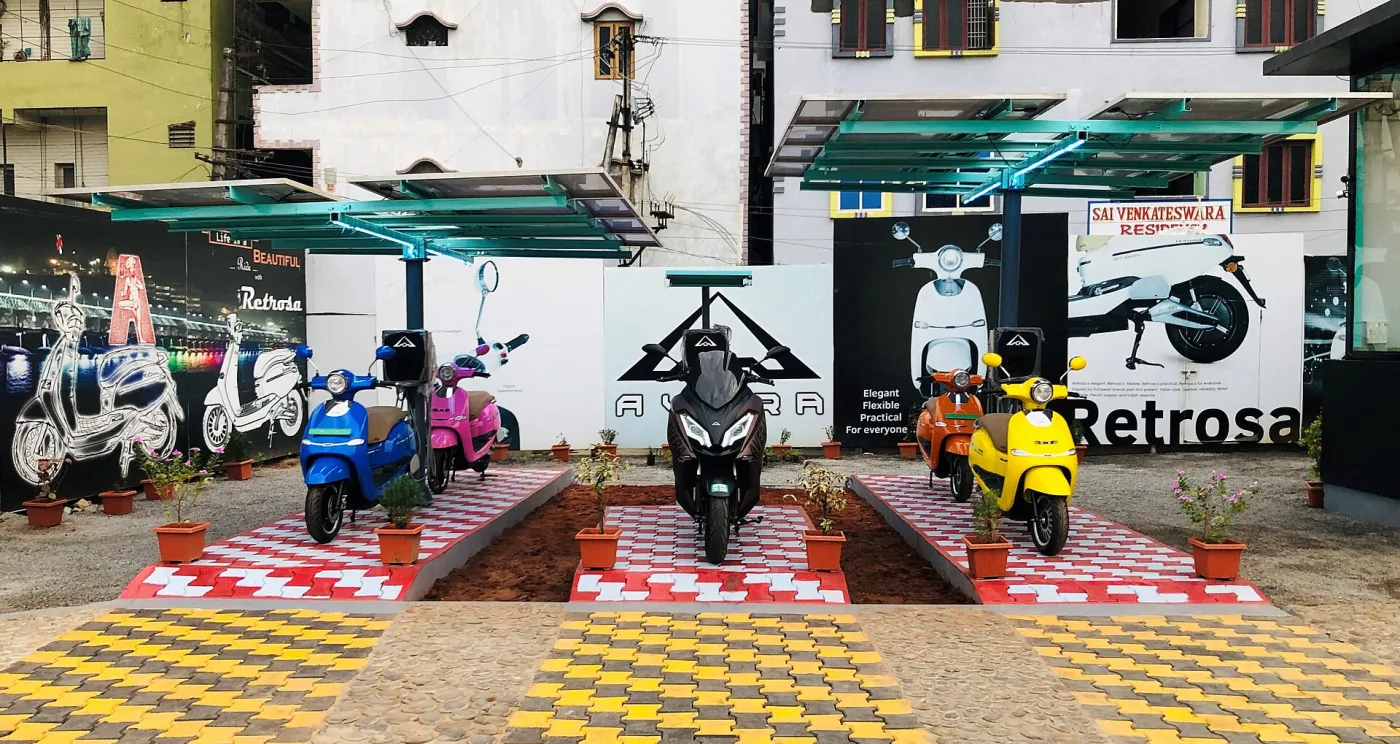
A solar-powered charging station with battery storage — the array, the storage and the gun on one site.
Sell electricity you did not have to buy
An EV charging station is a business with exactly one major input cost: electricity. You buy units from your DISCOM at ₹8–12 and sell them to drivers at ₹18–24. Solar attacks the left side of that equation, permanently.
Photo by Krishna Subrahmanyam, CC BY-SA 4.0

Doing both at once is the only time the economics of a charging site really work: the site survey, the load study and the electrical contractor are shared, and the solar fixes your input cost for twenty years.
Send this to us on WhatsApp
Send on WhatsAppOpens a chat on +91 77788 04214. Nothing is stored here — you press send. Free for buyers: manufacturers pay us when a deal closes.
Your message
Why the combination works better than either alone
Because solar fixes the charging station's weakest point, and the charging station fixes solar's.
Solar's usual problem is that it generates when many buildings are empty, so a chunk of output gets exported at below retail value. A charging station consumes precisely during daylight hours — so a solar array next to a charger is nearly all self-consumed, which is the best possible case for solar economics.
The charging station's problem is margin compression. Your spread is fixed between what the DISCOM charges and what drivers will pay, and when tariffs rise you absorb it. With solar, a tariff rise makes your existing array more valuable rather than less. You have hedged your main input cost for twenty years.
How to size the solar array
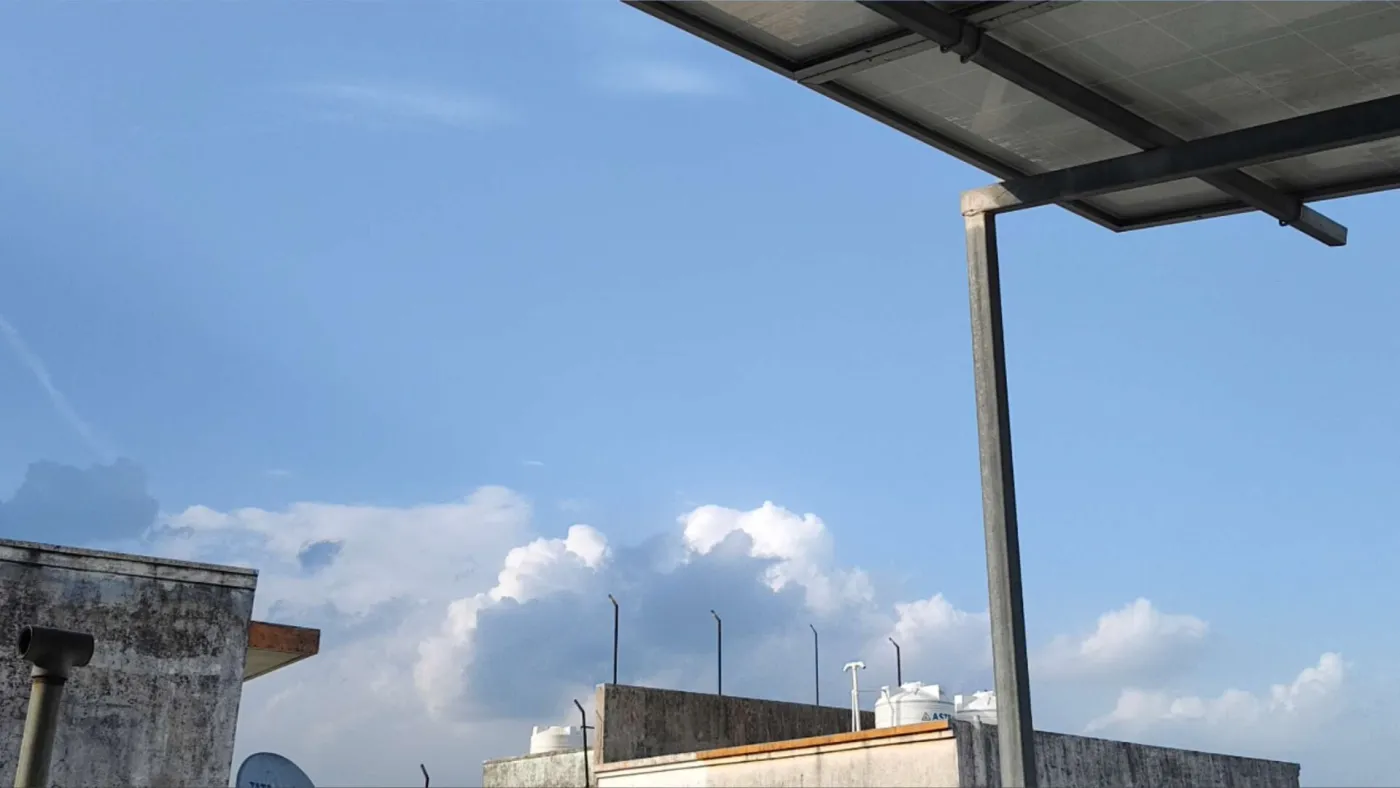

Size to daily units sold, not charger rating. This is the mistake almost everyone makes.
A 60 kW charger does not draw 60 kW all day — it draws 60 kW for the 40 minutes a car is plugged in. What matters is your total units. Solar generates roughly four units per kW per day in most of India, so:
| Cars per day | Units sold daily | Solar to cover it | Roof or canopy area | Indicative solar cost |
|---|---|---|---|---|
| 4 cars | 100 | 25 kW | 2,500 sq ft | ₹11–14 L |
| 6 cars | 150 | 38 kW | 3,800 sq ft | ₹16–19 L |
| 10 cars | 250 | 63 kW | 6,300 sq ft | ₹25–31 L |
| 20 cars | 500 | 125 kW | 12,500 sq ft | ₹48–60 L |
Assumes 25 kWh per session and 4 units per kW per day. Most sites deliberately undersize solar slightly, because the last few kW of array only earn export rates on your quietest days.
Where night charging changes the maths
If your station's traffic is mostly evening and overnight — fleet depots, residential societies, hotels — solar still helps, but through net metering rather than direct self-consumption. You bank daytime generation and draw it back at night. That works where net metering is genuinely available for your consumer category, and works poorly where your state only offers net billing at a low export rate. It is the first thing we check.
What you save by doing both at once
- One site survey and load study. Both projects need the same assessment of your feeder, sanctioned load and earthing. Paying for it twice is pure waste.
- One sanctioned-load application. A single combined application to your DISCOM, rather than going back a year later and discovering the upgrade you just paid for does not accommodate the new array.
- One transformer upgrade, correctly sized. This is often ₹1–4 lakh saved outright.
- One structure. An elevated solar canopy over the charging bays is the weather protection your bays needed anyway.
- One contractor and one commissioning visit, with a single point of accountability if something does not work.
What to be sceptical about
Three claims in this space are routinely overstated, and you should push back on all of them:
- "Fully solar powered station." Unless there is a very large battery, the station runs on the grid at night. That is fine and normal — but the marketing phrase is doing work the engineering is not.
- Battery storage as a default. Batteries roughly double the capital cost and only pay for themselves where you need backup anyway or have genuinely bad export terms. Ask for the numbers with and without.
- Payback projections that assume 100% self-consumption. Run the numbers at 70–80% and see whether the project still looks good.
Model both sides
Run the charging station first to see your monthly units, then switch to solar and size the array against them.
Indicative only, and deliberately includes the costs vendor calculators leave out. It excludes rent, staff, GST treatment and your DISCOM's specific demand-charge structure.
Indicative planning numbers. Real figures depend on your roof structure, shading, your state's net-metering terms and your sanctioned load.
Questions about combining the two
Does solar make sense together with an EV charging station?
Yes, and it is the single best combination in this market, because an EV charging station's biggest running cost is electricity. A solar array sized to your daytime charging load replaces grid units costing ₹8–12 with self-generated units costing effectively nothing after payback, which widens your margin on every kWh you sell. The two also share infrastructure: the same site survey, the same load study, the same electrical contractor and often the same transformer upgrade. Doing them together is materially cheaper than doing them a year apart.
How much solar do I need to run a 60 kW EV charger?
About 40 to 60 kW of solar for a 60 kW charger running moderate daytime utilisation. The sizing logic is not charger power, it is daily units: a station selling 150 units a day needs roughly 37 kW of solar to cover that, since solar generates about 4 units per kW per day. You do not size solar to the charger's peak rating, because the charger rarely runs flat out — sizing to peak wastes capital on capacity you cannot consume or export profitably.
Can I run an EV charging station entirely off-grid on solar?
Technically yes, practically almost never worth it. An off-grid charging station needs enough battery storage to cover evening demand and cloudy days, and that battery typically costs more than the charger and solar combined. The standard and far better answer is grid-connected solar: you generate during the day, draw from the grid at night, and net metering handles the difference. Off-grid only makes sense where there is genuinely no reliable grid connection available.
Does the solar canopy count as the charging station canopy?
Yes, and this is one of the real savings in doing both together. An elevated solar structure over the parking bays serves as the weather protection your charging bays need anyway, so one steel structure does two jobs. You are paying for the mounting structure either way with solar; getting shaded, rain-protected charging bays out of it is effectively free.
Can I get quotes for both an EV charger and solar in one request?
Yes, and you should. Both need the same site survey, the same sanctioned-load study and the same electrical contractor, so bundling them avoids paying for that work twice and often avoids a second transformer upgrade. We route a combined requirement to vendors who do both, which is a smaller and generally more capable set than EV-only installers.
What hidden costs should I expect beyond the charger price?
Four things that vendors routinely quote separately or not at all: the transformer or sanctioned load upgrade, the DISCOM security deposit, demand charges on your monthly bill, and platform commission on every unit you sell. Demand charges in particular catch people out — a commercial connection bills you on your peak sanctioned demand whether you use it or not, so an underutilised 120 kW connection bleeds money every month. Always compare landed cost and monthly fixed cost, never just hardware price.
One requirement, vendors who do both
Tell us about the site once. We route combined requirements to vendors who handle charging and solar under one scope — a smaller and generally more capable set than EV-only installers.
Pick either option in the form and mention the other on the call, or just call +91 77788 04214.