Delhi NCR, Delhi — distribution by BSES Rajdhani, BSES Yamuna and Tata Power DDL.
Setting up an EV charging station in Delhi NCR
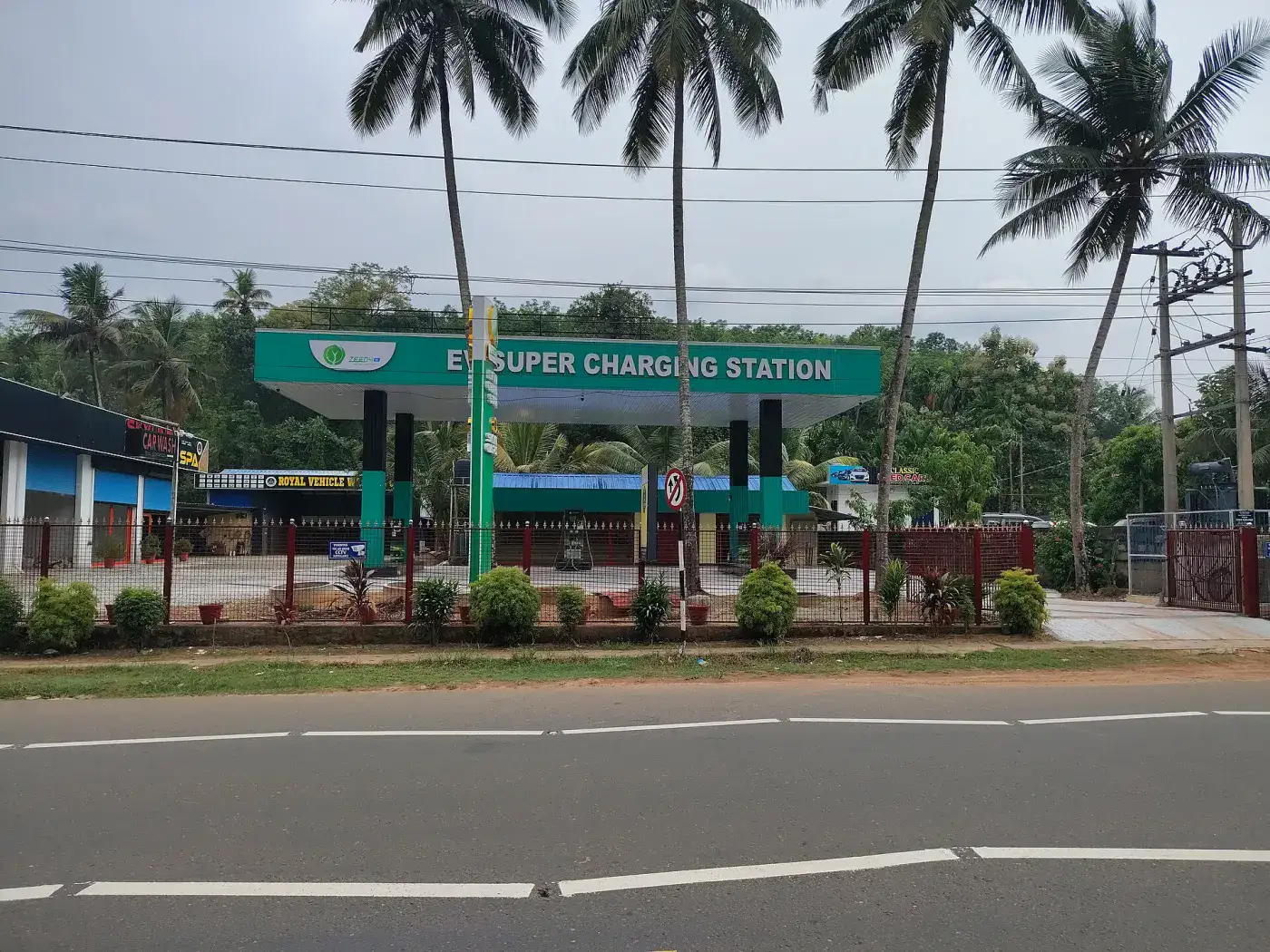
Photo by Manukrishnan80, CC BY-SA 4.0

A 60 kW dual-gun DC station in Delhi NCR costs roughly ₹9 to 19 lakh all-in. Your local distribution utility is BSES Rajdhani, BSES Yamuna and Tata Power DDL, commercial power runs ₹8.0–11.0 per unit, and public DC charging retails locally at around ₹18–24 per unit.
Delhi has the most supportive EV policy environment in India plus a concessional charging tariff, which is why station economics work here at lower utilisation than elsewhere.
We collect your requirement once, verify it on a call, and send the identical brief to vendors who actually work in Delhi NCR — so the quotes you get back are comparable on landed cost rather than on hardware price.
Planning a charging site in Delhi NCR?
We already know your utility and your local tariff — they go in the message. Just tell us what kind of site it is.
Send on WhatsAppOpens a chat on +91 77788 04214. Nothing is stored here — you press send. Free for buyers: manufacturers pay us when a deal closes.
Your message
The local numbers that decide your project
National averages are useless when you are deciding on one site. These are the figures that actually move your payback in Delhi NCR.
- Distribution utility
- BSES Rajdhani, BSES Yamuna and Tata Power DDL
- Commercial tariff per unit
- ₹8.0–11.0
- Public DC charging retail rate
- ₹18–24
- Solar yield, if you add an array
- 1380 units/kW/yr
- Areas with the strongest demand
- Gurgaon · Noida · Dwarka · Saket · Aerocity · Faridabad
- Highway and arterial corridors
- Delhi–Jaipur NH-48 · Yamuna Expressway · Delhi–Meerut Expressway
Getting your connection from BSES Rajdhani, BSES Yamuna and Tata Power DDL
Delhi has a concessional EV charging tariff and a single-window process that is genuinely among the better ones in India. Gurgaon (DHBVN) and Noida (NPCL/PVVNL) are separate utilities with separate rules.
Whatever your utility, the sequence is the same: check your existing sanctioned load from your latest bill, apply for a commercial connection at the load your charger needs on top of that, and find out early whether the local feeder or distribution transformer can carry it. Where it cannot, you pay for the upgrade — and that is the line item that turns a ₹10 lakh project into a ₹15 lakh one.
What the full cost looks like
The charger is the number every vendor shows you. The other four lines are where first-time buyers in Delhi NCR lose ₹2–5 lakh they had not planned for.
| What you are paying for | Low | High | Why it moves |
|---|---|---|---|
| Civil work, canopy, foundation, cabling | ₹1.5 L | ₹3.0 L | Higher if you want weather protection and lighting, which you should. |
| Transformer or sanctioned load upgrade | ₹1.0 L | ₹4.0 L | The single most common budget shock. Depends entirely on your existing feeder. |
| DISCOM commercial connection, deposits, liaisoning | ₹0.50 L | ₹2.0 L | Security deposit scales with sanctioned load and is refundable but ties up cash. |
| Network software, signage, commissioning, first-year AMC | ₹0.40 L | ₹1.5 L | Platform commission on every unit sold is separate and ongoing. |
| Site works, before equipment | ₹3.4 L | ₹10.5 L | Add the manufacturer's equipment quote to this. Compare the total, never the hardware alone. |
Model a station in Delhi NCR
Set your electricity cost to the ₹8.0–11.0 band and your selling price within the ₹18–24 local range, then be honest about cars per day.
Indicative only, and deliberately includes the costs vendor calculators leave out. It excludes rent, staff, GST treatment and your DISCOM's specific demand-charge structure.
Indicative planning numbers. Real figures depend on your roof structure, shading, your state's net-metering terms and your sanctioned load.
Solar yields 1380 units per kW here
Delhi offers a generation-based incentive on top of the central subsidy for residential systems, which is unusual and improves small-system payback significantly.
Since a charging station's main cost is the electricity it buys, and both projects need the same site survey and load study, Delhi NCR sites frequently do better installing both at once than a year apart.
Where charging demand is in Delhi NCR
- Gurgaon
- Noida
- Dwarka
- Saket
- Aerocity
- Faridabad
Corridors
- Delhi–Jaipur NH-48
- Yamuna Expressway
- Delhi–Meerut Expressway
EV charging questions, answered for Delhi NCR
How much does an EV charging station cost in Delhi NCR?
A 60 kW dual-gun DC station in Delhi NCR costs roughly ₹9–19 lakh all-in — ₹6–10 lakh for the charger and the rest for civil work, a transformer or sanctioned-load upgrade, and the commercial connection from BSES Rajdhani, BSES Yamuna and Tata Power DDL. Your position on that range depends almost entirely on whether your site's existing feeder can carry the extra load.
Which electricity board handles EV charging connections in Delhi NCR?
BSES Rajdhani, BSES Yamuna and Tata Power DDL. Delhi has a concessional EV charging tariff and a single-window process that is genuinely among the better ones in India. Gurgaon (DHBVN) and Noida (NPCL/PVVNL) are separate utilities with separate rules.
What is the commercial electricity tariff in Delhi NCR?
Commercial consumers in Delhi NCR typically pay ₹8.0–11.0 per unit, and public DC fast charging retails locally at around ₹18–24 per unit. That spread is your gross margin before demand charges and platform commission. Confirm your own slab from your latest bill, since tariffs vary by consumer category and sanctioned load.
Is Delhi NCR a good location for a charging station?
Delhi has the most supportive EV policy environment in India plus a concessional charging tariff, which is why station economics work here at lower utilisation than elsewhere.
Do I need a licence to open an EV charging station in India?
No licence is required. The Ministry of Power has explicitly de-licensed EV charging — operating a public charging station is not a regulated activity, so you do not need a power trading or distribution licence. You do need a commercial electricity connection from your DISCOM with adequate sanctioned load, and your installation must meet CEA safety standards and local electrical inspectorate approval. GST registration applies to the service revenue.
How long does it take to get an EV charging station running?
Six to twelve weeks if your electrical infrastructure is already adequate, and three to six months if it is not. The charger itself arrives in two to four weeks. What sets your timeline is the DISCOM: a commercial connection on an existing adequate feeder can be sanctioned in three to four weeks, while a transformer upgrade or new feeder can take three months or more depending on your utility.
Get Delhi NCR quotes
Vendors who actually serve Delhi NCR, quoting against the same brief. Free for buyers, and we will tell you if your site does not work.
Call +91 77788 04214 or message us on WhatsApp.
Nearby:
Planning a charging site in Delhi NCR?
We already know your utility and your local tariff — they go in the message. Just tell us what kind of site it is.
Send on WhatsAppOpens a chat on +91 77788 04214. Nothing is stored here — you press send. Free for buyers: manufacturers pay us when a deal closes.
Your message